

Family medicine is the broadest documentation job in clinical practice. One morning might include well-child checks, diabetes follow-ups, acute URI, prenatal visits, and behavioral health — each with different note skeletons and billing rules.
An AI scribe for family medicine wins when template libraries match that diversity.
FM visit mix documentation needs
| Visit type | Documentation focus |
|---|---|
| Wellness / preventive | Screening, counseling, health maintenance |
| Chronic follow-up | Interval change, med titration |
| Acute same-day | Focused HPI, exam, disposition |
| Behavioral health | Safety, therapy/meds, care coordination |
| Peds in FM panel | Caregiver context, growth, vaccines |
Family medicine specialty page | Primary care AI scribe overview.
Template library strategy
Do not use one SOAP for everything. Minimum FM library:
- Adult chronic follow-up
- Acute visit
- Annual wellness
- Pediatric well-child (or link to peds template)
- Telehealth visit
Custom templates and specialty packs.
Canadian and U.S. family physicians
FM is the anchor specialty in both countries — privacy posture matters for cross-border groups.
PIPEDA guide | Canadian FM guide.
Small group rollout
FM clinics often adopt scribe tool-by-tool across partners. Standardize templates before rollout.
DPC and concierge FM
Lower volume but higher documentation expectations per visit — AI scribe ROI includes patient experience, not only throughput.
Worked example: keep a multi-concern follow-up organized
This fictional documentation example illustrates structure, not a treatment recommendation. Suppose the clinician dictates: “Follow-up for two ongoing concerns. The patient reports taking the prescribed medication and has brought home readings. We discussed a separate knee concern, but no knee examination was performed today. Review readings at the next appointment.”
A useful draft keeps the problems separate and makes missing information visible:
Subjective
- Medication use and home readings discussed; specific values not provided.
- Separate knee concern raised; symptom details not provided.

Objective
- No examination findings supplied in the dictation.

Assessment and plan
- Ongoing condition: clinician to add assessment after reviewing readings.
- Knee concern: no examination performed today; clinician to complete plan.
- Follow-up: review readings at the next appointment; interval not specified.
The test is whether the tool preserves the limits of the source. It should not invent normal examination findings, turn an unspecified medication into a named drug, or choose a diagnosis. Before signing, replace incomplete prompts with your actual assessment and plan.
Try two templates before a full clinic day
Start with a chronic care follow-up template and an acute sick visit template. Use different structures when the documentation needs differ, rather than forcing every encounter into a long generic note.
For each draft, record the minutes spent reviewing, the important omissions, and the unsupported statements you removed. Compare this with your usual process over a representative mix of visits. A useful result is less total documentation work while preserving the information you need for continuity.
See the workspace and choose the right plan
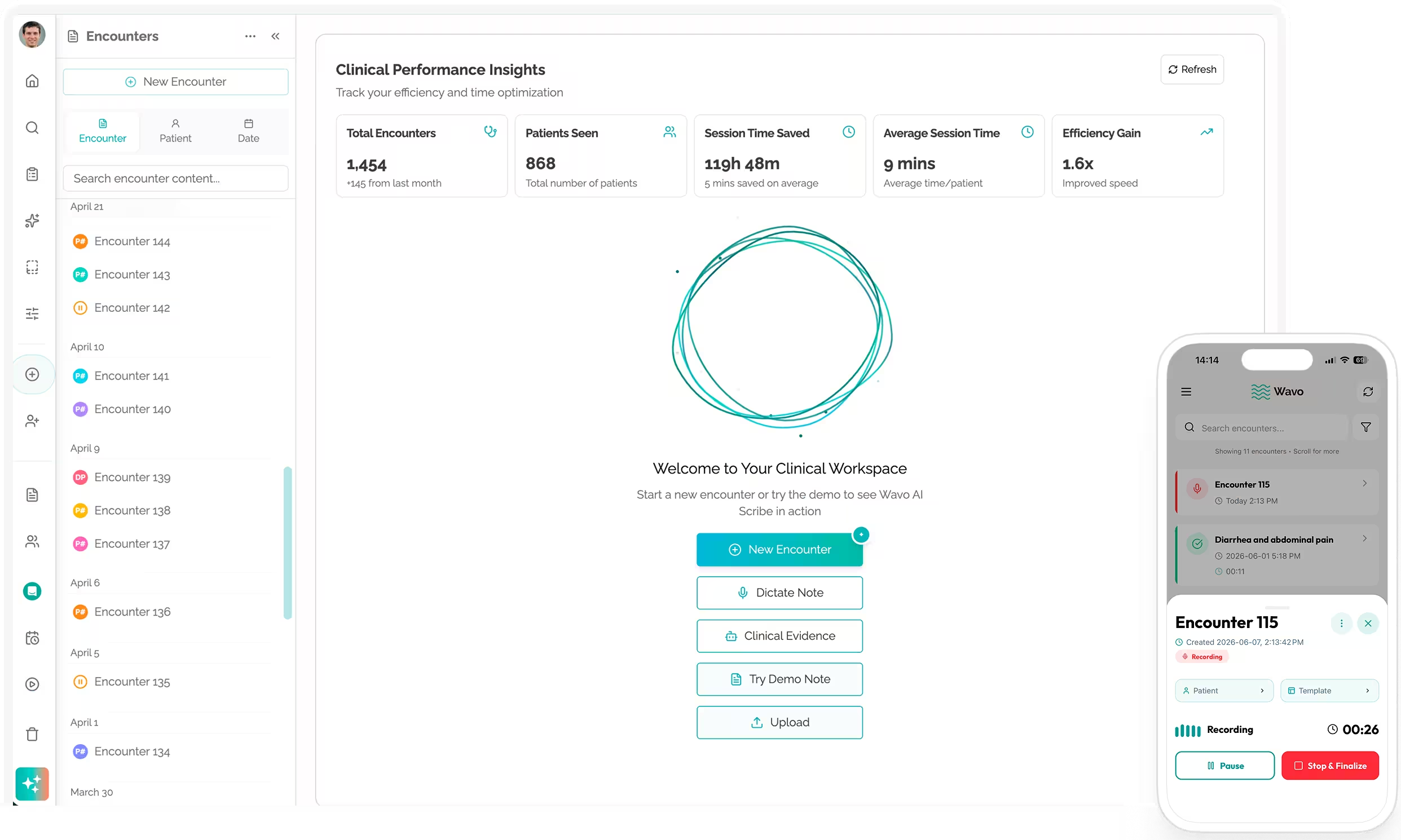
The image shows Wavo’s workspace; the fictional note above is an illustrative review exercise, not a captured product result. Explore Wavo for family medicine, then compare plans: Pro includes unlimited notes and specialty templates; Intelligence adds coding support and the clinical assistant.
Evaluation
Run a full clinic day — not one demo visit. FM fit shows up on visit #12 when fatigue hits.